
Developers researching ByteConnect often come across conflicting information online. With so many monetization SDKs on the market, it makes sense to be cautious and do your homework before integrating any third-party solution. This article clarifies what ByteConnect actually does, addresses common misconceptions, and helps you decide whether it's the right fit for your project.
What ByteConnect Actually Is
ByteConnect is a monetization SDK designed for developers who build apps, games, or IoT devices. That's the core of what we do, we help developers generate revenue from their applications.
Here's how it works in practice: you integrate our SDK into your application, and it uses unused network bandwidth from your users' devices to create a revenue stream. The SDK operates in the background, handling monetization without interrupting what your users are doing.
Think of it as an alternative revenue stream that doesn't rely on bombarding users with advertisements or forcing them into subscription models. Your app does what it's supposed to do, and ByteConnect handles monetization behind the scenes.
How Developers Benefit
We built ByteConnect specifically for developers who want clean monetization without compromising user experience. No banner ads, no video ads, no pop-ups. Just straightforward passive revenue that scales with your user base.
The revenue model is transparent on the developer side: the more active users you have, the more you earn. We provide real-time reporting so you can track exactly how much your integration is generating. Everything runs automatically once you've got the SDK implemented.
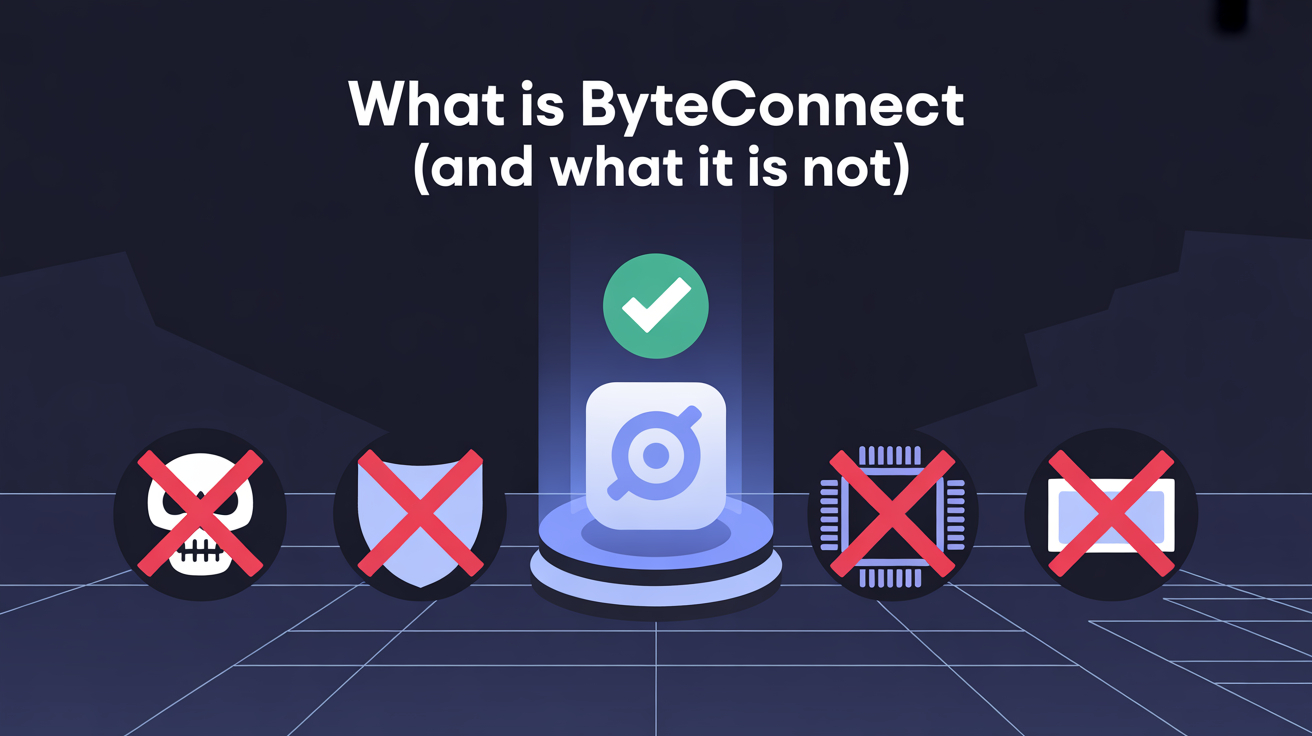
What ByteConnect Is NOT
Let's knock out the biggest misconceptions, because there's a lot of misinformation floating around.
We're not malware. ByteConnect is a legitimate SDK that developers choose to integrate. When legitimate developers integrate ByteConnect with proper disclosure and user consent, there's nothing malicious about it.
We're not a VPN. VPNs route and encrypt all your traffic through remote servers to mask your identity and location. ByteConnect doesn't do that. We share bandwidth for business use cases, but we're not providing privacy tools or rerouting your entire internet connection.
We're not crypto mining. Cryptocurrency mining absolutely hammers device CPUs and drains batteries like crazy. Our SDK is designed to be lightweight and efficient, the opposite of mining operations. We're monetizing network bandwidth, not computational power for blockchain calculations.
We're not an ad network. You won't see banner ads, video ads, or pop-ups with ByteConnect. The whole point of our monetization model is that it runs silently in the background without cluttering your app's interface or interrupting the user experience.
Who ByteConnect Was Built For
ByteConnect exists for developers who want alternatives to traditional monetization. Maybe you're tired of filling your app with ads that annoy users. Maybe your audience won't pay for subscriptions. Or maybe you just want to diversify your revenue streams beyond the usual options.
We work with developers across mobile apps, desktop applications, and IoT devices. As long as your product has network connectivity and you're transparent with users about what they're consenting to, ByteConnect can fit into your monetization strategy.
The Integration Reality
Our SDK is designed to be clean and straightforward to integrate. It's not complicated. You integrate the SDK, obtain user consent, and it runs in the background. You receive revenue for the amount of people using your app that have opted in. The infrastructure is built to scale without requiring additional configuration on your end.
Conclusion
ByteConnect is a developer monetization tool that works through bandwidth sharing. We're upfront about what we do. If this monetization model fits what you're trying to accomplish and you can be transparent with your users about it, reach out. If not, no worries. There are plenty of monetization options out there, and you should use whatever works best for your situation.