
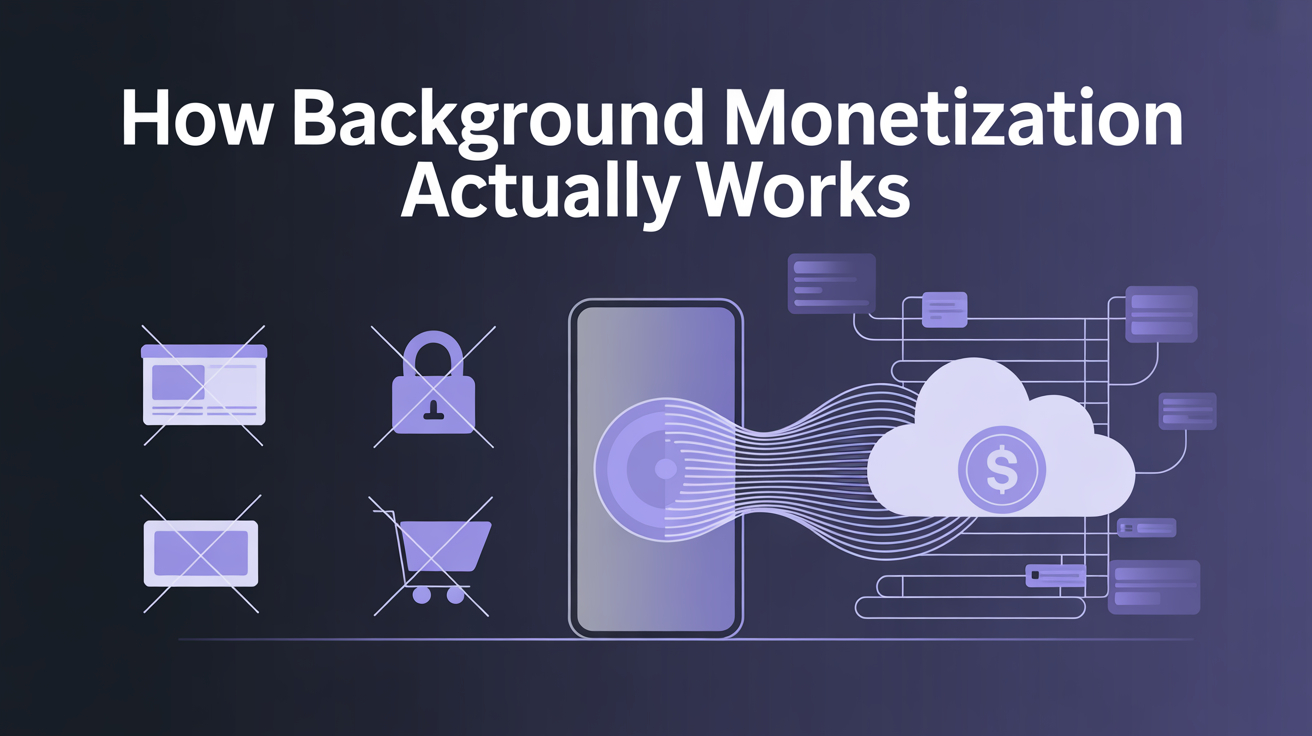
Most developers understand traditional monetization pretty well. You show ads, users get annoyed. You charge subscriptions, some people pay. You add in-app purchases, conversion rates stay low. Background monetization works completely differently, and it's worth understanding how before you dismiss it or dive in.
How the Model Works
Background monetization through ByteConnect is built on a simple exchange. Users agree to share a small portion of their internet bandwidth. Businesses pay to use that bandwidth for legitimate data collection. Developers receive revenue for facilitating the connection.
Nobody's getting exploited here. Users opt in and get an ad-free experience in return. Businesses get the infrastructure they need for data collection. Developers get paid without cluttering their apps with intrusive monetization.
The Business Problem ByteConnect Solves
Here's the problem businesses face: they need to collect public data from the internet at scale. Pricing information, market research, publicly available content. This data changes constantly and varies by region.
If a business tries to scrape this data from a single location or IP address, they hit walls immediately. Websites detect the repetitive requests and either block the IP or serve inaccurate information. Rate limits kick in and the data becomes useless.
The solution is routing requests through a distributed network of residential IP addresses across different regions. Instead of accessing websites from one location, requests come from real residential connections all over the world. This allows businesses to gather accurate data without triggering detection systems.
That's where ByteConnect comes in. We provide the infrastructure that connects businesses who need distributed bandwidth with developers whose users are willing to share it.
What Users Actually Share
When users opt into ByteConnect, they're giving permission for web requests to be routed through their internet connection. The SDK doesn't access their files, monitor their activity, or control anything on their device.
ByteConnect uses a small amount of their bandwidth to route web requests for data collection purposes. The impact on users is essentially zero. They don't see ads and their device performance doesn't change.
What the Data Is Used For
So what are these web requests actually doing? They're collecting publicly available information from websites. Prices on e-commerce platforms, market data. Content that's already accessible to anyone with an internet connection.
For example, Amazon prices vary by region and change throughout the day. A business analyzing pricing trends needs to check those prices repeatedly from different locations. By routing requests through residential IPs in different regions, they get accurate, real-time pricing information.
This isn't about accessing private data. It's about efficiently collecting public web data.
Where Developers Fit In
As a developer, you're the connection point between users and the monetization infrastructure. You integrate the SDK, implement proper user consent, and ByteConnect handles the rest.
The SDK runs in the background without affecting your app's functionality or user experience. You're not adding ads, paywalls, or annoying popups. Your app works exactly the way you designed it.
You get paid based on how many users opt in and participate. More users means more revenue for you. You get real-time tracking so you can see exactly how much your integration is generating.
Privacy Protection Built In
The SDK doesn't access anything on the user's device. It can't see files, monitor browsing activity, or control the computer. All it does is route web requests through the user's internet connection to publicly accessible websites.
There's no tracking of what users are doing. No harvesting of personal data, no surveillance. Users maintain complete control, they opt in, and if they change their mind, they can opt out.
What Makes This Different from Traditional Monetization
Traditional monetization methods have trade-offs that affect your users. Ads interrupt the experience and clutter your interface. Subscriptions create barriers that limit your audience. In-app purchases require constant content development and only convert a small percentage of users.
Background monetization operates differently. It generates revenue without changing how users interact with your app. There's nothing to click, watch, or buy. Your app maintains its original design and functionality while monetization happens silently in the background. Users who opt in get the benefit of an experience without ads, and you get a steady revenue stream that scales with your user base.
Who Can Benefit from Background Monetization
Background monetization works for developers across different app categories and user base sizes. Whether you're building mobile apps, desktop software, or IoT devices, ByteConnect can fit into your monetization strategy.
The key to success is transparency with your users. Being upfront about how the monetization works builds trust and improves opt-in rates. When users understand they're getting an ad-free experience in exchange for sharing a small amount of bandwidth, they're more likely to participate willingly.
The revenue scales naturally with your user base growth. As your app gains traction and your active user count increases, your earnings grow proportionally. Real-time tracking lets you monitor performance and see how the monetization contributes to your overall revenue strategy.
Final Thoughts
Background monetization connects users who share bandwidth, businesses who need distributed data collection infrastructure, and developers who facilitate the connection. Users get ad-free experiences, businesses get accurate data, and developers get paid. It's a straightforward exchange where everyone involved gets value from participating.